According to the minutes of the Federal Reserve’s last policy meeting, information gathered at the time indicated that inflation remained high and continued to climb, partly due to energy and other supply shocks. Labor market conditions remained stable, and real GDP continued its steady growth. In April, total consumer price inflation, as measured by the 12-month change in the personal consumption expenditures (PCE) price index, was 3.8%. Core PCE inflation, excluding changes in consumer energy prices and many food prices, was 3.3%. Both total and core inflation were higher than the same period last year, influenced by factors including the transmission of past tariff increases, rising energy and input costs due to the Middle East conflict, and a surge in demand driven by artificial intelligence (AI) development. Core goods price inflation was higher than the same period last year, which staff believed primarily reflected the impact of tariffs and AI-related price pressures. Based on the consumer and producer price index data, the estimated total PCE inflation rate rose to 4.1% in May, mainly driven by rising consumer energy prices; the core PCE inflation rate was estimated at 3.4%.
This record reflects the Federal Reserve’s need to raise interest rates to curb inflation, and also its basis for such a move. Under the influence of this interest rate hike sentiment, gold prices are likely to lack support at their current highs and have significant room for a pullback in the short term.
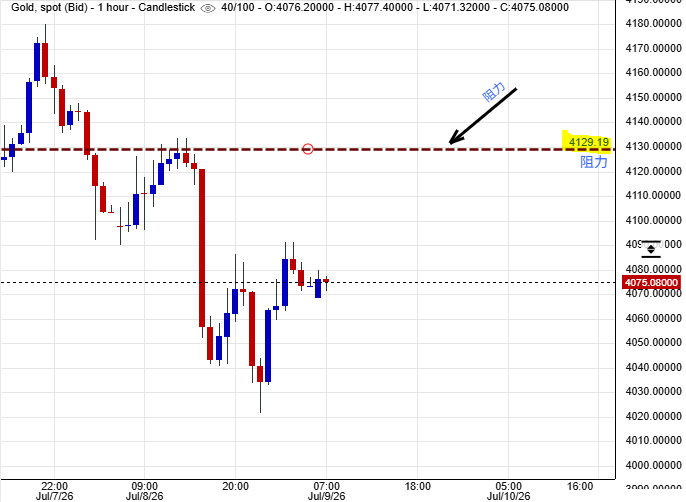
A short position can be established around $4,129, with a short-term target of $4,012 for profit-taking and a stop-loss at $4,149.
Gold Price 1-Hour Chart:
Ferris Kwok
Chief Analyst
Success Finance Group
Email: ferris.kwok@successfn.com